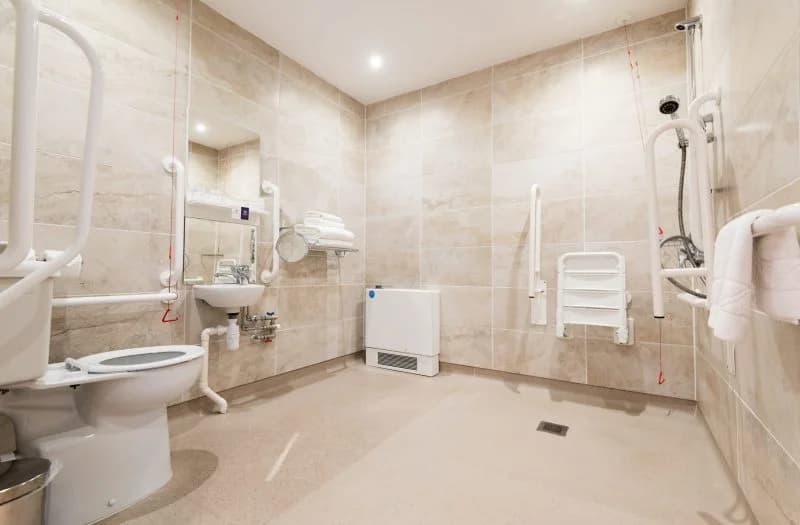
Imagine arriving at your holiday hotel after a long journey, only to discover that the accessible room you've booked has a step into the shower. Or that the restaurant is at the other end of a steep pathway.
The hotel might genuinely describe itself as accessible. The problem is that accessible means different things to different people.
And when you've spent your hard-earned money looking forward to a holiday, discovering those differences after arriving is the last thing you want.
That's why I believe accessible travel should start with a conversation about what works for you, rather than a tick beside a wheelchair symbol on a hotel website.
Your requirements come first
There isn't one checklist that works for everybody.
For someone using a wheelchair, doorway widths, turning space and bathroom layouts might be essential. Another traveller might be more concerned about walking distances, somewhere to sit regularly, or the availability of quieter spaces.
Accessibility isn't only about mobility, either. Hearing, sight, sensory needs, fatigue and non-visible disabilities can all influence what makes a holiday comfortable and enjoyable.
The important thing is understanding which arrangements you absolutely need and which would simply make the experience better.
For example, if a level-access shower is essential, a hotel advertising adapted rooms isn't enough reassurance on its own. We need to know whether the particular room available for your dates has the facilities you require.
It's about getting meaningful answers rather than accepting reassuring descriptions.
A hotel is more than its bedroom
Let's say we've found a hotel with a suitable adapted room. Excellent start.
But what happens when you leave it?
Can you comfortably reach the restaurant, swimming pool and other facilities? Are there lifts connecting the different areas? How far is it from the bedroom to reception?
Sometimes a hotel looks wonderfully accessible in its photographs, yet the route to the pool involves steps or a steep slope.
And if swimming is part of your holiday plans, the pool itself deserves some attention. A handrail and a pool hoist are very different arrangements, and neither tells us everything about whether you'll be able to use it comfortably.
If lifts or particular routes are essential to you, it's also worth asking about alternative arrangements if they're temporarily unavailable.
A suitable room is important, but the rest of the hotel needs to work for you too.
The bathroom details really do matter
Bathrooms are one area where small differences can have a considerable impact.
A hotel might describe its bathroom as having a walk-in shower, but that doesn't necessarily mean the entrance is completely level. Similarly, a photograph showing grab rails might not reveal whether there's enough space beside the toilet for a transfer.
Depending on your requirements, useful details could include:
The width of doorways and space to turn.
Bed height and which sides of the bed are accessible.
Shower access, seating and grab-rail positions.
Toilet height and available transfer space.
Room for mobility equipment or someone travelling to provide assistance.
Recent photographs, measurements or a floor plan can often answer questions that a general hotel description cannot.
If these details are important to you, I'd rather seek proper clarification before booking than discover the answer when you arrive.
Don't forget the journey to the hotel
Here's a detail that can easily be overlooked: an accessible hotel doesn't automatically come with an accessible airport transfer.
A private transfer and a wheelchair-accessible transfer aren't necessarily the same thing.
Some travellers can transfer into a standard vehicle seat, with their wheelchair transported separately. Others need to remain seated in their wheelchair throughout the journey.
Those are very different requirements.
If a wheelchair-accessible vehicle is needed, we may have to establish the equipment's dimensions, the appropriate boarding arrangements, securement and available space for everyone travelling.
It's also worth knowing where you'll meet the driver, how the return journey works and whether luggage can be accommodated alongside any equipment.
The good news is that these are practical questions we can investigate. The key is asking them before the arrangements are finalised.
Flying with assistance or mobility equipment
Airports and airlines provide assistance for passengers with disabilities and reduced mobility, but it's important to arrange the support you need.
The UK Civil Aviation Authority recommends requesting assistance when booking, or at least 48 hours before departure, to help ensure the arrangements are in place.
Support may include getting through the airport, boarding the aircraft and reaching your seat.
However, there's an important distinction between travel assistance and personal care.
Airline staff are not generally expected to help passengers eat, drink, take medication or use the toilet. If you need that kind of support, arrangements for someone travelling with you may be necessary.
If you're taking an electric wheelchair or mobility scooter, airlines also need information about the equipment, particularly its size, weight and battery.
I'd always want to establish what happens to the equipment at the airport, when it needs to be handed over and where it will be returned.
You can read the official guidance here:
What about equipment at your destination?
Sometimes the equipment you need on holiday isn't something you can easily bring from home.
That might include a hoist, shower chair, mobility scooter or another piece of specialist equipment.
Where suitable hire arrangements are available, we need to know what's actually being supplied, whether it works with your accommodation and how delivery and collection will be handled.
It's also important that equipment is compatible with your individual requirements. A hoist being available locally, for instance, doesn't necessarily mean it's suitable for you or the room you've booked.
These arrangements often need cooperation between different providers, which is another reason to establish the details before travelling.
Exploring beyond the resort
Of course, you might not want to spend your entire holiday in the hotel.
Perhaps you'd love to visit a local market, enjoy a boat trip, explore a city or simply find a lovely restaurant overlooking the sea.
A place being close to your hotel doesn't necessarily mean it's easy to reach. Hills, uneven surfaces, kerbs and limited transport options can turn a short journey into a difficult one.
And accessibility can vary between attractions, taxis, trains and excursions.
For cruises, there's another consideration. A ship may have suitable cabins and facilities, while getting ashore at certain ports involves a tender boat or arrangements that won't suit every passenger.
None of this means those experiences are automatically out of reach. It simply means the individual arrangements matter.
A holiday with fewer surprises
One of the most important parts of planning an accessible holiday is knowing the difference between something you've requested and something the supplier has actually confirmed.
If a particular room, transfer or piece of equipment is essential, I'd want those details recorded clearly before you make your decision.
It's also sensible to reconfirm important arrangements ahead of departure, particularly if anything about your travel plans changes.
I can't promise that every hotel or destination will meet every requirement. But I can help investigate the options, ask more specific questions and explain what has and hasn't been confirmed.
And that's really the point of all this.
Your holiday shouldn't be defined entirely by what you need to work around. It should be about where you want to go, what you'd love to experience and making the arrangements as suitable as possible.
So tell me about the holiday you'd like to have, along with the practical things that matter to you.
We'll start there